Posts

Showing posts with the label STEAM

Recovering Ecosystem Structure and Functioning Through Restoration
Image
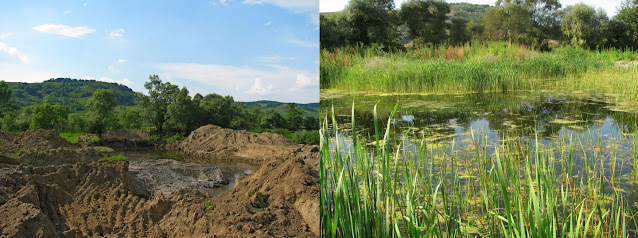
 Hello and welcome to the last STEAM term of my senior class, Frontiers. For this action project, we looked into eight grand challenges that our marine ecosystems have been facing. Along with that, we asked to assemble a literature review to dive deeper into one of the challenges that were listed with the eight grand challenges. I decided to tackle the challenge of restoration and how we are able to recover our dying ecosystem structure through restoration. I wanted to focus on this challenge because I think that it is our responsibility as humans to take care of our ecosystems, especially if we are the ones affecting them. By addressing restoration it can also address the challenge of restoring our dying ecosystems, which can also lead to evolutionary approaches for future benefits involving biodiversity. Here is my literature review and I hope you enjoy it!                              ...

Virtual Engagement through Community

Welcome to my first action project for the third term of my senior STEAM class, Social Entrepreneurship.  I've been looking forward to this class ever since my junior year at GCE Lab School! For this unit, we have been directing our focus on how psychology is associated with entrepreneurship and what that specifically looks like? We got to learn about different personality traits and how people interact with others. In class, we decided to test out personality tests for ourselves and take a close look at them. This allowed us to understand what these traits mean and they are used in different situations. For this unit, we had the privilege to meet with entrepreneur, Maren Rosenberg, the founder of Escape Artistry. We were fortunate enough to hear her story and also ask her questions about entrepreneurship and a little more about what she does! For this action project, we were asked to create an improvement plan for our school, GCE. We had to assemble psychological research and data...

Coding to Know

For this final Action Project for our class, Computer Science we decided to look more into "If-statements" as a whole and how we are able to use them when coding. While learning about "If-elif-else statements" we decided to complete some assignments to practice these new concepts. For this Action Project, we decided to implement these ideas and practices into this project. We were asked to become chatbots and create a code that will communicate with the user. Before doing this action project we were able to play around with a chatbot that was already made. With this, we were able to receive a better approach when creating our own. I decided to go in the direction of just asking pretty common questions and then revolving it around the topic of school. I wanted to do this because I wanted the coding to sound like an actual conversation with the user, where they can actually feel like they are talking to someone. After finally completing my chatbot I was super excited...

How is my Future Going to Look Like?

Image
 Welcome to my first Action Project for my first senior class, Economics! For this first unit, we have learned and studied a lot of different economic terms. For example, opportunity cost, supply and demand, incentives, etc. These special terms are prominent in Econ and provide great importance. We then dove straight into math concepts, that are super interesting to discover that are also very valued in the Economic world such as compounding interest, matrices, etc. We have used these concepts and terms in our action project and can really use these new and distinguishable ideas in the real world. Especially, when it comes down to thinking about your career! That's exactly what we did for this action project. Here's a video for more explanation of what else you will be discovering through this blog:   When I look into the future I see myself as an aspiring Art Director and entrepreneur surrounded by innovators, scholars, and intellectual thinkers. When choosing my career and...

Planning A New Neighborhood!

For this final term of STEAM for the year, we focused on how we are able to reconstruct the city. We dove into the deeper meaning of a better city, and what that exactly looks like. Throughout this unit, we had watched a series of TED Talks speaking upon the importance of community, architecture, and a number of other things that are necessary to create a successful city for the citizens who live in it. These TED Talks also spoke about the "laziness" and inequality that can be found in many cities, suburbs, and minority neighborhoods/areas. By watching and deeply understanding these TED Talks we decided to become designers ourselves! I was able to pick any area around the world where we were able to redesign and make changes in the space. I focused on where I live, and the changes that I would personally like to better the area as a whole. To conclude, this was a very interesting and creative action project. I was able to find the importance and meaning of what creat...

Say Watt?

In this second unit of Urban Planning we dove deeper into the use and innovations of electricity. We first started by learning about the history of electricity, and how it came to be! The earliest time that electricity was being utilized was when the "War of Currents" had occurred this involved Nicholas Tesla and Thomas Edison in making the type of current, Direct Current (DC) or Alternating Current (AC). We then learned about circuits, and how they are used and what each function does. Circuits include resistance, power, switches, batteries, motors, etc. We then learned how to draw each source on a circuit diagram, and what the units are for each component. For this action project we decided to utilize our circuits by applying what we know to make an energy efficient device. I decided to create an electric car that solely uses solar power energy to power the lights of the car. Lights in general take up a lot of energy, and I wanted to dive deeper on how much light and energy...

I Guess You Can Say Bridges Are Really Supportive

In our fourth and final term of the year, we are taking a class called Urban Planning! We looked into what it's like creating a city. Specifically, bridges, and how they are an important factor when living in a busy city like Chicago. We dove deeper in trigonometry and triangles this unit. The reason why we learned so much about triangles is that triangles are actually the strongest shape for bridges, which is also why we built truss bridges for this action project. For our Field Experience, this unit our STEAM teacher went out to Downtown, Chicago. We connected with him through Google Meets due to COVID-19. By going on this Field Experience we were able to actually take a closer look and observe the city, and the positives and negatives of it. For this Action Project, we were asked to make our own bridges out of popsicle sticks and glue. We had to make sure it was sturdy enough to carry a gallon on top of it. We also had to think about SDG #11, and how it relates to what we are ...

What Time Is It?

Image
Throughout this unit, we have been discovering what time is and how it works. This led us to continue our mini-lessons on time. Each student gave us a presentation on how time works in different and creative ways. For this unit, we learned about how to tell time without really using a digital clock or our phones. We also learned the history and background of how clocks were created and how it was back then when trying to tell the time. We first learned about sundials. Sundials, are gnomons (tall stick or pillar) where you can put into the ground to determine the shadow it captures and the way it moves. When using a sundial you are able to see how the sun is used to tell the time of day it is. Along with learning about sundials, we learned about longitude, latitude, and how we can calculate our location by using Greenwich Mean Time (GMT). This is Newton's Cradle time clock! This is used to determine the hours that have passed, which allows kids and students to truly understan...

Diddley Bowie

This is my Action Project for my class called, Light, Sound, and Time. In this class, we conducted a lot of activities to understand the connection between the three elements: Light, Sound, and Time. For this unit, we only focused on sound and how it travels to our ears along with, speed, pitch, wavelength, frequency, etc. For this unit, we had a field experience to The Chicago Hearing Society where we were able to speak to people who have trouble hearing or can't hear at all and use what we learned in our first class, empathy. It was an interesting way to get a different perspective on sound and how it affects someone's life. So for this action project, we put all the elements that we have learned throughout this unit and make a diddley bow. Similarly, to the pinhole cameras, we made to study light. For this action project, I found it super fun and also challenging at the same time. It was my first time making a diddley bow, which looks simple but also hard to make. ...

Oh Snap!

Image
In this course called Light, Sound, and Time we examined more about light and how it works. We learned different concepts and functions about why light does what it does and how it does it. While breaking down this concept we learned new vocabulary words and spent some time learning about the electromagnetic spectrum. We also learned a lot about the eye and how that correlates to the light and the effective ways light helps the eye to collect information. Another topic we went over was how light has great importance when using any type of camera and how a camera is very similar to the eye and its functions. For this action project, we were able to make our own pinhole cameras. By doing this we were able to really get to see how light works and controls the exposure of the camera on an image. Since we made pinhole cameras we got to take some photos and then go to Harry Truman S. College to get them developed, so we got to see the interesting process of getting our photos developed. ...

Trust Me I'm A Cycologist

In this second and final course of the term in Design and Engineering, we were assigned to design and create a bike according to a specific person's needs. Throughout this term, we have been learning about the purpose of the functions of a bike. We took a trip to Working Bikes where we were able to get the bikes "ready" to be shipped to Jordan for those who are in need of bikes. While we were there we were able to conversate with our host Anna about the importance of bikes and how they are built in many different ways and used in different mechanisms. We also visited a bike shop called Earth Rider. We rode some electric-powered bikes and tested out what made them so different from regular bikes. Through this process, we thought about the possible ways we can change and shape a bike to make it unique while becoming useful and easy when riding it. So for this action project, we were assigned to create a bike that fit a specific person's needs based on their environment,...

I'm Tilling You, this Tool is Great!

In my first unit for my STEAM course Design & Engineering, we started off the year with going to the garden, picking up trash, and planting some flowers. After we completed that task we talked about what it means to use tools and the different things that we are capable of when using them. We went on and discussed how we can calculate the area, volume, and surface area of the garden we were working on. By doing this we also learned about vectors, Pythagorean theorem, and SOHCAHTOA and implemented these concepts in our work. Now, going into what we learned about tools, we discussed what simple tools are and how they make up different day to day objects and what it means exactly to be a designer and engineer. Throughout this process, we compared and contrasted different tools, pointing out how some parts of the tools contain simple machines inside of them. We paid close attention to this because we thought back to the tools we used to use and the common tools we see today. Some examp...

Trust Me I'm A Doctor

Image
Unfortunately, this is the final unit of our STEAM class, Cure. Throughout this unit, we learned how to prevent diseases before being diagnosed with them. We briefly learned about probability and the ways it can affect the possibility of getting a disease or illness. In class, we created a family tree by talking to our parents or any family members about our history of diseases or a common disease that may run in the family. For example, diabetes, heart failure, cancer, Alzheimer's, etc. I found this activity interesting because I have never really thought or even looked into the diseases that are passed down in the family or any diseases that have occurred in the family. For this action project, we created a patient profile where we played doctor and patient. We had the option to either create a fictional patient or a real patient. For the profile, we had to create a medical history for the patient and list the risk assessments, nutrition recommendations, lifestyle advice, etc. Fo...

I'm Sick And It's Snot Funny

For the second unit of our STEAM course, Cure, we learned about medications and treatments. We took a look at how medication and drugs are different and how they alter the body in different ways. An interesting way we learned this was by completing a lab using miracle berries. To give us a better understanding of how a drug changes our bodies, we consumed a miracle berry. This type of drug basically cancels out our sour receptors and reveals the sweetness of the food item that is originally sour. This helped us have a better understanding of how a medicament works. A medicament works by targeting certain receptors to cancel out pain or nerve activity. For this action project, we had to choose a symptom to learn about and research a medication that is prescribed, an over the counter medication, and another type of treatment that is easily accessible. I chose a common symptom, which is a cough. By demonstrating our research, we had to produce what we learned into a medication box. I deci...

Can This Eye Pun Get Any Cornea?

In this first unit of our STEAM course Cure, we learned about cell biology and the functions of a cell. We started off this term reading, The Immortal Life of Henrietta Lacks. This book is about how HeLa cells came to exist. In the 1950s, Henrietta Lacks was a woman who was diagnosed with cervix cancer. After she passed scientists discovered that her cells kept on reproducing. By doing so we also learned how cells multiply and the importance it has in humans. For this course, we also learned about different surgeries and how cells are affected by the many different procedures. For this action project, we had to conduct a slideshow about a specific type of surgery following the procedure, the cells affected, what type of surgery, post-operation, etc. For my project, I chose to learn about an enucleation which is the removal of the eye, and the process of it contains behind the operation. While conducting this project I learned so much more than I expected to. When picking t...

How Did You Sleep Last Night?

Image
In this STEAM class called Disease, we have been looking into different mental diseases and the struggles others have to experience. During this second unit, we read the book, The Reason I Jump by Naoki Higashida. This book is about a young boy who has autism. In this book, the author answered some questions people have about autism and the way he deals with his autism. In class, we also learned how to create a piecewise function by using a graph and the different brain waves people produce at any time of the day. For this action project, we had to choose a disorder to focus on and research. I chose to research insomnia. When doing this, we had to conduct a simulation for our class and demonstrate how it is to have that specific disorder. We also had to record the brainwaves of our classmates during the whole session. Definitions of insomnia According to MedicineNet, insomnia is, “The perception or complaint of inadequate or poor-quality sleep due to a number of factors, such as...

I'm Not Ill, My Pancreas Is Just Lazy!

Image
In our winter term for our STEAM class, Disease, we have been learning about the different body systems that a human obtains the help to keep our body in balance. We also went over the causes of different diseases and how our bodies react to those certain diseases. In addition, we learned about the classification of diseases such as the cause, geographics, and geoeconomics. For this Action Project, we had the opportunity to create a patient profile and describe how their disease affects their everyday lifestyle depending on what it is exactly. I chose to take a look at type two diabetes and how it affects someone in different ways. I also interview someone who currently has diabetes, in order to get her experience of type two diabetes. I think type two diabetes is pretty common. It is a common disease because it could come because of aging, excess weight, family history, etc. Every person who does have diabetes goes through a different journey with it.        ...

Partners In Time!

Image
For this elective term, I am taking a STEAM class called Game Changers. In this class, we have been learning the different mechanisms, strategies, logistics, and engineering of different games. We have gone on Field Experiences where we have met game designers and understood how much effort and thought that goes into a game. Over this term, we have played many games and analyzed each aspect of it. For this Action Project, we were able to create our own game. By creating our own game, we had to make sure we identified the theme, strategies, player interaction, scoring mechanism, the design, the player elimination, having to have clear and understandable wording for the players, etc. At the beginning of this term, I had never played many games and when I did, I didn’t think about all of the different components they contained. Now that I am creating my own game with my group, I can see each tiny detail a game is made out of. Pitch For Partners In Time: Partners In Time is a game wher...

How Does The Human Population Affect The Titi Monkeys?

Image
Over this unit of Population, we have been learning about the interactions and relationships organisms grow over time to survive or if they don't benefit depending on different interactions with different organisms. There's a lot of different kind of interactions that organisms develop such as, amensalism, commensalism, predator, mutualism, neutralism, competition, and parasitism but for this action project, we are looking at how humans affect a certain type of organism. For this action project, I chose the Titi Monkey and how human might affect their species as a whole. I will be looking at the interactions humans and the Titi Monkeys have with one another, and the population of the organisms over these past years. SR.TitiMonkeys.2018 I will be telling you facts about the organisms and showing you how humans affect the Titi Monkeys and if they changed over time because of the human interactions with them or if they don't even have an effect in them. When finding the p...

Don't Get Your Forest In A Twist

Image
In this unit of Population, we have been talking about evolution and the changes in organisms and how they adapt to the environment around them. In this action project, we are hypothetically creating a different environment and habitat for the organism we chose. I decided to choose the Bolivian Gray Titi Monkey (Callicebus donacophilus ) which I worked on in my previous action project. Since we had to create a different environment, we are observing the organism to see if they can survive through the changes and how they might actually evolve so that they can survive to the new habitat. Throughout this unit, we were luckily able to go to the Field Museum. With this experience, we were able to go in depth of evolution and really analyze the history of many organisms and how they have changed throughout time. It was a very interesting and engaging being able to look in each exhibit and be able to relate what we saw to what we were learning in class. The Evolution Of The ...